

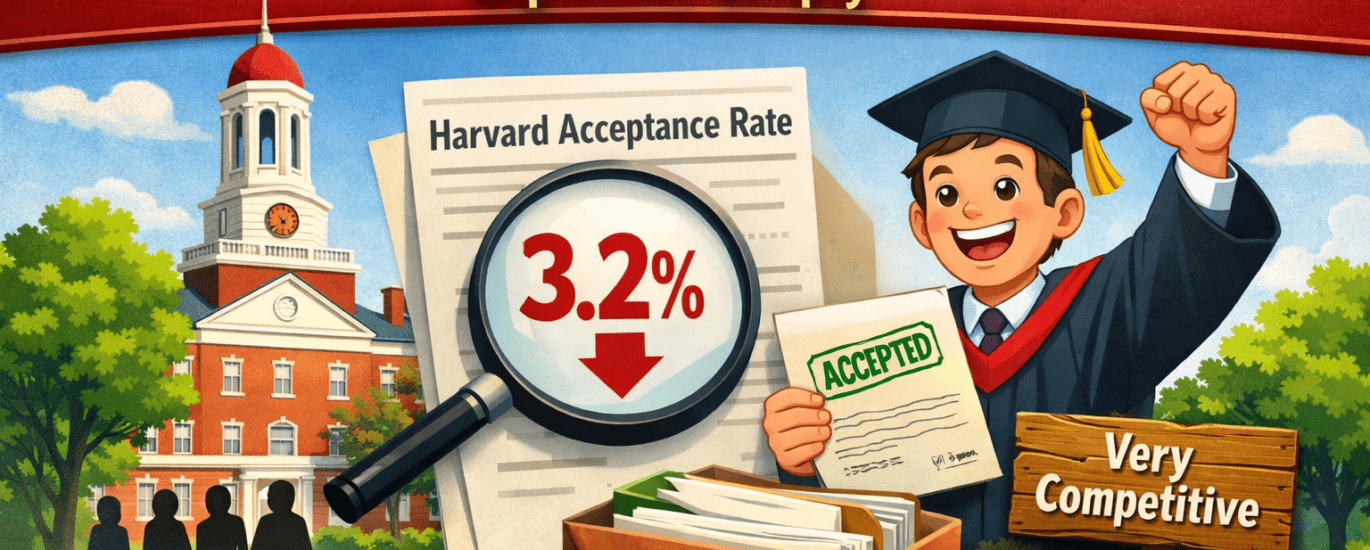
Harvard University is one of the most famous and respected universities in the world. Every year, thousands of students dream of joining Harvard. But getting admitted is not easy. The Harvard University acceptance rate gives us a clear picture of how competitive it is. This guide will explain the acceptance rate in simple terms, helping you understand your chances in 2026.
What is Harvard University?
Harvard University is located in Cambridge, Massachusetts. It is a private Ivy League university founded in 1636. Harvard is known for its excellent education, research opportunities, and strong alumni network. Many leaders, scientists, and famous people have graduated from Harvard.
What Does Acceptance Rate Mean?
The acceptance rate is the percentage of applicants who get admitted.
Example:
If 10,000 students apply and 1,000 are accepted, the acceptance rate is 10%.
The acceptance rate shows how hard it is to get into a school. A lower rate means higher competition.
Harvard University Acceptance Rate 2026
In recent years, Harvard has become more competitive. The acceptance rate has been around 3–5%. For 2026, experts expect a similar rate, making it one of the most selective universities in the world.
Key Points:
Harvard receives over 50,000 applications each year.
Only about 2,000–2,500 students are accepted.
The competition is intense because students from all over the world apply.
Factors Affecting Harvard’s Acceptance Rate
Several factors affect the acceptance rate. Understanding these can help students improve their chances.
Academic Excellence
Harvard looks for students with strong academic records. This includes:
High GPA
Challenging courses (AP, IB, honors)
Excellent test scores (SAT/ACT – though many schools are test-optional now)
Extracurricular Activities
Harvard wants well-rounded students. Extracurriculars show:
Leadership skills
Community involvement
Talents in arts, sports, or science
Essays and Recommendations
A strong personal essay and recommendation letters are crucial. They show:
Personality
Goals
Passion and motivation
Diversity and Unique Experiences
Harvard values diverse backgrounds. Unique experiences, challenges overcome, or unusual talents can make an applicant stand out.
How Harvard Chooses Students
Harvard uses a holistic review process. This means they do not only look at grades or test scores. They consider the student as a whole.
They look for:
Academic ability
Personal qualities
Leadership potential
Community impact
This approach explains why some students with perfect grades may not get in, while others with slightly lower scores may.
Why Harvard’s Acceptance Rate is Low
The acceptance rate is very low for several reasons:
Global Reputation
Harvard is known worldwide. Students from every country want to study here. This increases the number of applicants.
Limited Seats
Harvard has a small freshman class (about 2,000–2,500). With thousands of applicants, most students cannot be accepted.
High Standards
Harvard maintains strict standards to ensure the quality of education and students. Only top-performing and highly motivated students are admitted.
Tips to Improve Your Chance of Admission
Even with a low acceptance rate, some strategies can improve your chances.
Start Early
Begin planning early. Focus on grades, extracurriculars, and test scores.
Excel Academically
Take challenging courses and maintain high grades.
Develop Unique Skills
Engage in activities that make you stand out. Be creative and show leadership.
Write Strong Essays
Your essay should reflect your personality, goals, and experiences.
Get Strong Recommendations
Ask teachers or mentors who know you well and can write honest, powerful letters.
Understanding the Numbers
Let’s look at Harvard’s recent statistics for clarity.
| Year | Applications | Accepted | Acceptance Rate |
|---|---|---|---|
| 2022 | 57,435 | 2,300 | 4% |
| 2023 | 57,000 | 2,200 | 3.9% |
| 2024 | 58,000 | 2,400 | 4.1% |
| 2025 | 57,500 | 2,300 | 4% |
Note: These numbers can slightly change for 2026, but the trend remains highly competitive.
Harvard’s Test-Optional Policy
Harvard has adopted a test-optional policy. This means:
Students can apply without SAT/ACT scores.
Applications are still competitive.
High test scores can strengthen your application but are not required.
International Students and Acceptance Rate
Harvard attracts students worldwide. International students face extra challenges:
Visa requirements
Higher competition from global applicants
Financial planning for tuition and living costs
However, Harvard provides scholarships and financial aid for international students based on need.
Harvard’s Financial Aid Policy
Harvard follows a need-blind admission policy:
Admissions do not depend on financial ability.
Families earning less than $75,000 per year usually pay nothing.
Even high-income families may get aid depending on circumstances.
This makes Harvard accessible despite its low acceptance rate.
Common Myths About Harvard’s Acceptance Rate
Many people believe myths about Harvard’s admissions. Let’s clarify.
Myth 1 – Only Perfect Students Are Accepted
Truth: Harvard values overall potential, leadership, and character, not just grades.
Myth 2 – Legacy Students Always Get In
Truth: Being a legacy can help, but it doesn’t guarantee admission.
Myth 3 – You Need Huge Extracurriculars
Truth: Quality matters more than quantity. Focus on meaningful contributions.
Myth 4 – International Students Have Lower Chances
Truth: Harvard welcomes global students and provides strong support.
What to Expect After Applying
Once you submit your Harvard application:
Application Review: Admissions officers evaluate academics, essays, recommendations, and activities.
Interviews: Some applicants are invited for interviews.
Decision Release: Decisions are announced in late March or early April.
Harvard’s Early Action vs Regular Decision
Harvard offers two options:
Early Action
Apply by early November
Receive decision by mid-December
Non-binding (you can choose other schools)
Regular Decision
Apply by early January
Receive decision by late March
Standard process for most students
Early Action can sometimes improve chances, but both methods are competitive.
Harvard vs Other Ivy League Schools
Harvard is part of the Ivy League. Other schools include Yale, Princeton, and Columbia. Here’s a quick comparison:
| University | Acceptance Rate 2026* |
|---|---|
| Harvard | 3–5% |
| Yale | 4–6% |
| Princeton | 4–5% |
| Columbia | 5–6% |
*Estimated for 2026. Harvard remains among the most selective.
Conclusion
Harvard University’s acceptance rate for 2026 remains very low. This shows how competitive it is.
However, a low acceptance rate does not mean you should not try. With strong academics, meaningful extracurriculars, personal essays, and recommendations, your application can stand out. Harvard looks at each student as a whole, not just numbers.
Remember, preparation, planning, and perseverance are key. Apply smartly, focus on your strengths, and showcase your uniqueness.
FAQs
1. What is Harvard’s acceptance rate in 2026?
It is estimated to be around 3–5%.
2. Does Harvard require SAT or ACT scores?
No, Harvard has a test-optional policy.
3. Can international students get admitted?
Yes, but they face higher competition. Harvard offers scholarships for international students.
4. Does being a legacy improve chances?
It can help slightly, but it does not guarantee admission.
5. When are Harvard decisions released?
Early Action: mid-December
Regular Decision: late March